

















Canine dental disease can affect around 80% of dogs by the age of three, according to RSPCA Australia. That makes looking after your dog’s teeth an important part of their overall health and wellbeing.
And while your pup might not be flashing their pearly whites for the camera, what’s going on inside their mouth matters. Regular dental care can help reduce plaque and tartar build-up and support healthier teeth and gums.
So, let’s brush up on how to clean your dog’s teeth at home, plus a few other ways to keep their smile in good shape.
How to clean your dog’s teeth at home
Starting dental care early can help your dog get used to the process, but adult dogs can learn to tolerate toothbrushing too. The trick is to take things slowly and make the experience as positive as possible.
1. Start with short sessions
Choose a time when your dog is calm and relaxed. Begin by gently touching around their mouth and lifting their lips for just a few seconds at a time.
Keep sessions short and positive, especially when dental care is new to them.
2. Introduce pet toothpaste
Once your dog is comfortable with you handling their mouth, let them taste a small amount of dog-specific toothpaste from your finger.
Pet toothpastes often come in dog-friendly flavours, which can help make the process a little more appealing.
Never use human toothpaste, as it isn’t formulated for dogs and may contain ingredients that can be harmful if swallowed.
3. Get them used to having their teeth touched
Gently lift your dog’s lip and use your finger or a clean, soft cloth to touch the outside surfaces of their teeth.
Build this up gradually until they’re comfortable with you handling their mouth and touching their teeth and gums.
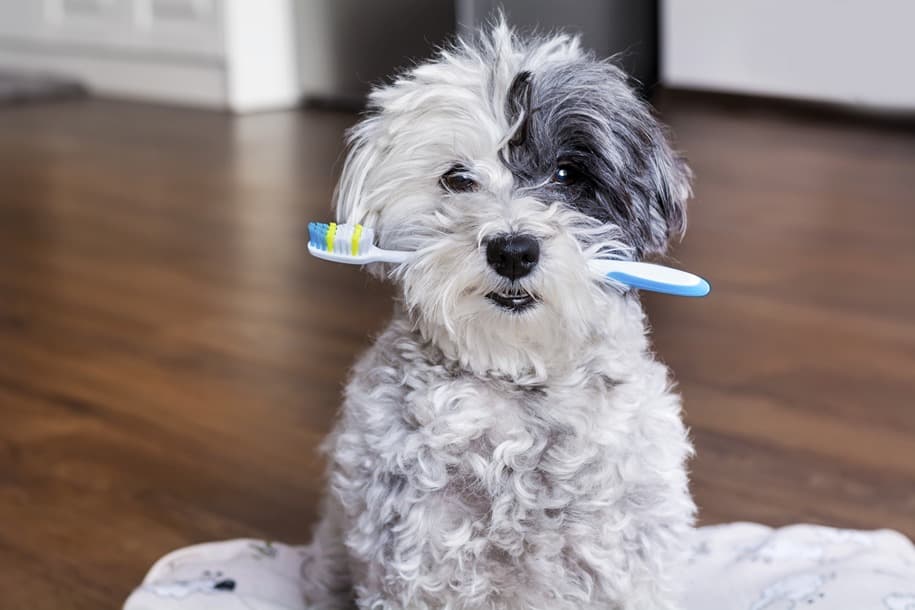
4. Introduce a toothbrush
Once your dog is comfortable, introduce a dog toothbrush, finger brush or another soft-bristled toothbrush recommended by your vet.
Focus mainly on the outside surfaces of the teeth, where plaque commonly builds up.
5. Build a routine
Daily brushing offers the greatest benefit, but don’t force it if your dog becomes stressed or uncomfortable. Even building up gradually to a regular routine can make a difference.
A little patience goes a long way — especially when your dog would rather chew the toothbrush than use it.
Reward your dog after brushing with praise, playtime or a favourite treat. Creating a positive association can help make dental care feel less like a chore for both of you.
Why does regular brushing matter?
Plaque is a soft film of bacteria that naturally builds up on your dog’s teeth. If it isn’t removed, it can harden into tartar.
Regular brushing helps tackle plaque before it has the chance to harden. Once tartar has firmly built up, however, your toothbrush probably isn’t winning that battle — professional dental cleaning may be needed.
Other ways to support your dog’s dental health
Brushing is one of the most effective things you can do for your dog’s teeth at home, but there are other products that can complement their dental routine.
Dental diets
Some specially formulated dental diets are designed to help control plaque or tartar as your dog chews.
Keep in mind that ordinary dry kibble doesn’t automatically provide the same dental benefits. Look for foods specifically designed to support dental health and speak with your vet if you’re unsure which option is right for your dog.
Dental treats and chews
Dog dental treats and chews can be another useful addition to your pup’s dental routine.
Some specially designed dental treats have textures or formulations intended to help reduce plaque or tartar while giving your dog something tasty to sink their teeth into.
Follow the serving directions on the individual product and remember to factor treats into your dog’s overall daily food intake.
How often should you give your dog dental chews?
Serving recommendations vary between products, so follow the directions on the pack.
Dental chews are best viewed as one part of a broader dental-care routine rather than a replacement for brushing or veterinary checks.
Dental toys
Some dog-safe dental toys may encourage chewing and complement your dog’s dental routine.
They can also add a little extra enrichment to playtime, but they shouldn’t replace regular brushing or professional dental care.
Oral gels, rinses and water additives
If your dog simply won’t tolerate brushing, there are other dental-care products available, including oral gels, rinses and water additives.
Some are designed to help reduce plaque or support oral hygiene, but effectiveness varies between products.
Choose products specifically formulated for dogs and follow the manufacturer’s directions. Your vet can also help you decide which options are most suitable for your pup.

Signs your dog may have dental problems
Dogs can be surprisingly good at hiding discomfort, so it’s worth keeping an eye out for changes in their eating habits or behaviour.
Signs of dental problems can include:
- Bad breath
- Red, inflamed or bleeding gums
- Yellow or brown tartar build-up
- Difficulty chewing
- Dropping food while eating
- Reduced appetite
- Pawing or rubbing at the mouth
- Drooling
- Loose, broken or discoloured teeth
- Swelling around the mouth or face
If you notice any of these signs, book an appointment with your vet rather than trying to solve the problem with brushing alone.
Don’t skip the vet dental checks
At-home care plays an important role in keeping your dog’s teeth healthy, but it doesn’t replace professional dental checks.
Your vet can spot problems that may not be obvious from the outside and recommend professional cleaning or further treatment if needed.
Regular checks are especially important because some dental problems can develop below the gumline, where they’re difficult to see at home.
Keeping your dog’s teeth clean might take a little practice at first, but building good habits can help support a healthier mouth for years to come. Start slowly, stay consistent and leave any existing dental problems to your vet.
Ready to brush up on their dental routine? Shop the PetPost dog dental care range for toothbrushes, toothpaste, dental treats and more.

3 min read
Article name that is long to see how it sits on two lines
Lorem ipsum dolor sit amet, consectetur adipiscing elit. Quisque dignissim purus orci, at hendrerit massa pretium nec. Maecenas vitae porttitor ante. am facilisis vestibulum massa in mattis. Donec maximus ut risus vel sodales. Nullam facilisis vestibulum massa in mattis.
3 min read
Article name that is long to see how it sits on two lines
Lorem ipsum dolor sit amet, consectetur adipiscing elit. Quisque dignissim purus orci, at hendrerit massa pretium nec. Maecenas vitae porttitor ante. am facilisis vestibulum massa in mattis. Donec maximus ut risus vel sodales. Nullam facilisis vestibulum massa in mattis.
3 min read
Article name that is long to see how it sits on two lines
Lorem ipsum dolor sit amet, consectetur adipiscing elit. Quisque dignissim purus orci, at hendrerit massa pretium nec. Maecenas vitae porttitor ante. am facilisis vestibulum massa in mattis. Donec maximus ut risus vel sodales. Nullam facilisis vestibulum massa in mattis.
3 min read
Article name that is long to see how it sits on two lines
Lorem ipsum dolor sit amet, consectetur adipiscing elit. Quisque dignissim purus orci, at hendrerit massa pretium nec. Maecenas vitae porttitor ante. am facilisis vestibulum massa in mattis. Donec maximus ut risus vel sodales. Nullam facilisis vestibulum massa in mattis.